Cases we see
Every kind of bite, for forty years.
Crowding to jaw surgery: what each problem is, when Dr. Omerza likes to start, the usual treatment, and who else is involved. Plain and general; your own answer comes from the free first visit.
A long record
Forty years of charts, and the families to go with them.
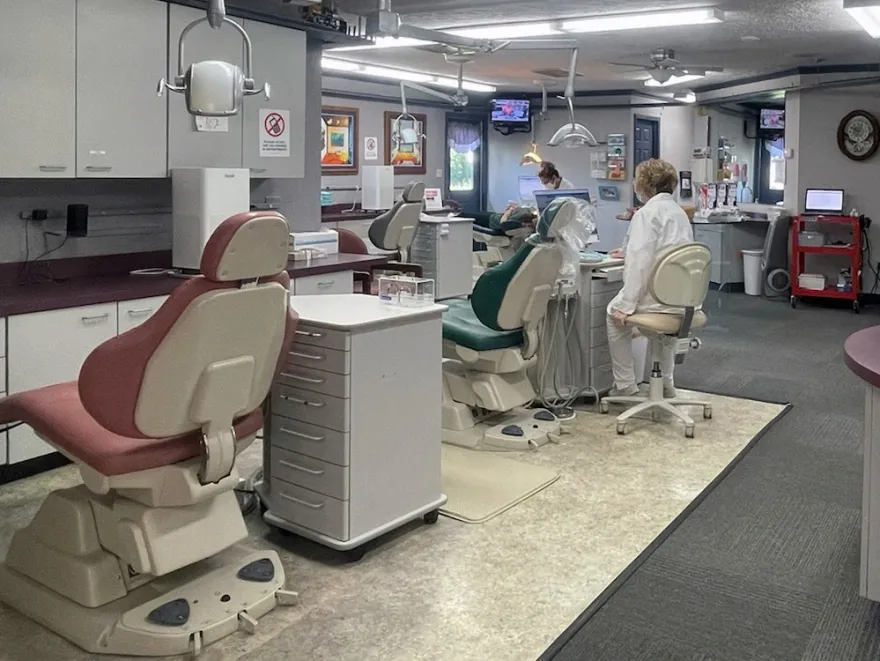
Dr. William Falk took over the Lorain practice in 1985. In the years before Dr. Omerza bought it in 2019, the office averaged about two hundred new treatment starts a year, and in 2020 the phone was still answered "Dr. Omerza and Falk's office." Four decades of that, and the chairs on Cooper Foster Park Road have seen nearly every kind of bite, from second graders to retirees. It is not unusual now for a parent at a first visit to have been a patient here once.
Below are ten kinds of cases in plain words: what each is, when Dr. Omerza likes to start, what treatment usually involves, and who else is involved. No two mouths are alike, so this page is a map, not a diagnosis. The diagnosis is the free first visit.
How long, honestly
The AAO says mild crowding or spacing can often be resolved in eight to twelve months, while more complex bite problems may take a couple of years, and adults may take slightly longer. A 2016 review of 22 studies put the average course of braces at 19.9 months.
Dr. Omerza's aim: simple cases in about a year, most within eighteen months, with visits every six to ten weeks.
Ten kinds of cases
From crowding to jaw surgery.
Generic on purpose: no counts and no patients, just what each problem is and how it is usually handled here.
Crowding
- What it is
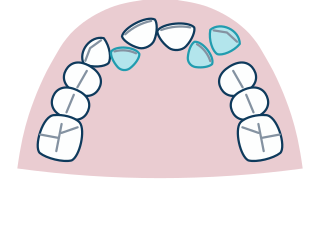
- Not enough room for the teeth, so they overlap, turn or get blocked out. Mild, moderate or severe, and often with a bite problem underneath.
- When he likes to start
- Once the adult teeth are in, if the jaws are fine. His rule is to wait for the last baby teeth unless something is blocking a tooth on its way in; then he clears the way first, usually by asking your dentist to remove a baby tooth.
- The usual approach
- Braces or aligners. The room comes from widening a narrow arch or, when the crowding is severe, from removing a few teeth, and never extractions without braces to manage the spaces. Mild crowding can often be resolved in eight to twelve months, says the AAO.
- Who else is involved
- Your family dentist, for any extractions. Dr. Omerza writes with the exact teeth and sends the X-ray.
Spacing and gaps
- What it is
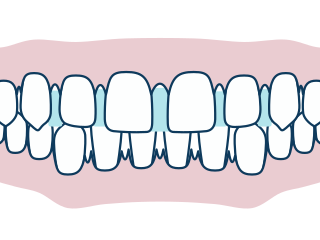
- Gaps between the teeth: teeth small for the jaw, a tooth missing, a tongue that pushes forward, or a space between the two front teeth that never closed.
- When he likes to start
- Usually once the adult teeth are in. A gap between a young child's new front teeth often closes by itself as the neighbouring teeth arrive, so we watch first.
- The usual approach
- Braces or aligners close most gaps. When the teeth are simply narrow for the space, the space is shared out and your dentist bonds the teeth a little wider. Mild spacing, like mild crowding, often takes eight to twelve months (AAO).
- Who else is involved
- Your family dentist, when bonding or a crown finishes the job.
Overbite and overjet (Class II)
- What it is
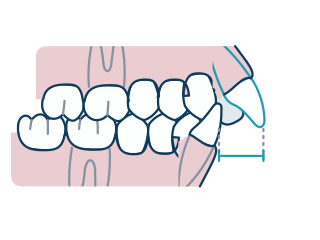
- Upper front teeth well ahead of the lowers, usually because the lower jaw sits back. Teeth that stick out are easier to injure.
- When he likes to start
- For most children, one course of treatment in the early teens. The clinical trials found one clear gain from starting early, fewer injured front teeth (19 in 100 against 30 in 100), so an early start is for front teeth that stick out a long way.
- The usual approach
- Braces with elastics; in a growing patient, an appliance such as a Herbst that holds the lower jaw forward; in a teenager with a strong chin and upper teeth that tip forward, sometimes two upper premolars removed and the front teeth drawn back. Complex bites can take a couple of years (AAO).
- Who else is involved
- Usually just us, with your dentist for any extractions. An oral surgeon only when, in an adult, the jaw itself has to move.
Underbites (Class III)
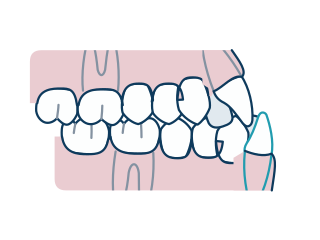
- What it is
- Lower front teeth closing in front of the uppers: a lower jaw that is long, an upper jaw that is short, or teeth that are simply tipped.
- When he likes to start
- Early. A lower jaw growing ahead of the upper is one of the things the check-up by age seven looks for, and the AAO warns that waiting until growth is nearly complete can make some problems harder to correct.
- The usual approach
- In a growing child whose upper jaw is behind, an expander and sometimes reverse-pull headgear worn at home and overnight. Mild underbites in teens and adults are often handled with braces. When the lower jaw keeps growing, the honest plan may be to wait and correct it with surgery once growth is over.
- Who else is involved
- An oral surgeon, for the few that are skeletal and fully grown.
Crossbites and narrow upper jaws
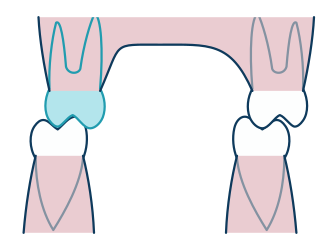
- What it is
- Upper teeth biting inside the lowers, at the back or at the front. A narrow upper jaw can make the lower jaw slide to one side to close.
- When he likes to start
- Earlier than most. A narrow upper jaw is easiest to widen while a child is growing, and a front tooth caught behind its lower neighbour is worth freeing early.
- The usual approach
- A palatal expander in a growing child, then braces later if they are needed. In an adult, widening the upper jaw takes an expander anchored to small screws in the bone, or surgery; the anchored kind now works for many adults, though the long-term evidence is still limited.
- Who else is involved
- Usually no one else; in adults, sometimes an oral surgeon.
Open bites
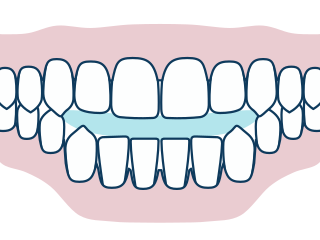
- What it is
- The back teeth meet and the front teeth do not: a thumb habit, the way the jaws grow, or a tongue that rests between the teeth, often more than one of these.
- When he likes to start
- A thumb or tongue habit is worth tackling early. The rest is timed to growth, with the tongue looked at before anything is promised.
- The usual approach
- A habit appliance or tongue crib in a child; braces and elastics later; then retainers the front teeth have to fit into, for life. Surgery for the few whose jaws are the cause.
- Who else is involved
- A speech-language pathologist or myofunctional therapist to retrain the tongue; rarely an oral surgeon.
Impacted canines
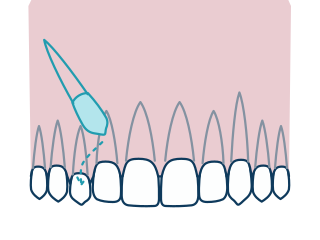
- What it is
- An eyetooth that will not come in: no room, the wrong angle, or a baby canine in the way.
- When he likes to start
- Watched from the first panoramic X-ray. The easy fix belongs to the years while the baby canines are still in place.
- The usual approach
- Often the dentist removes the baby canine and the adult tooth finds its own way. If not, braces make room, the oral surgeon uncovers the tooth and bonds an attachment with a fine chain, and we draw it down gently over months.
- Who else is involved
- Your family dentist and an oral surgeon.
Missing teeth
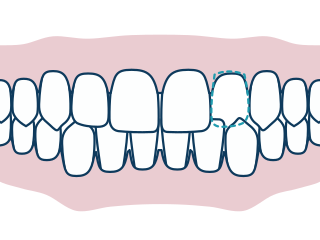
- What it is
- Adult teeth that never formed, most often an upper lateral incisor or a second premolar, or a tooth lost to an accident.
- When he likes to start
- Planned early, often from the first X-ray, because closing the space or keeping it shapes everything after.
- The usual approach
- Close the space and reshape the neighbours, or keep it: a healthy baby molar kept as long as it lasts, then a retainer with a false tooth until growth stops and an implant can go in.
- Who else is involved
- Your family dentist, who crowns the implant, and the oral surgeon or periodontist who places it.
Adults and second-time braces
- What it is
- Crowding that crept back years after braces, a bite that is wearing teeth down, a tooth to straighten before a crown or implant, or the braces you never had.
- When he likes to start
- Whenever you are ready, once the gums and teeth are healthy. "Regardless of your age, you are never too old for orthodontic treatment," says the AAO.
- The usual approach
- Clear aligners or clear braces, often a limited plan for what shows. Adult treatment may take slightly longer, the AAO says, and teeth shift for life, so the retainer afterward is for life too.
- Who else is involved
- Your dentist, for a recent cleaning and any crowns or implants; sometimes a periodontist for the gums.
Surgical cases
- What it is
- A jaw out of proportion that braces cannot disguise without spoiling the profile: a lower jaw much too short or too long, or an open bite the jaws themselves hold open.
- When he likes to start
- After growth has finished, confirmed with an X-ray of the hand and wrist; braces start some months before the operation.
- The usual approach
- Braces to set the teeth on each jaw, the operation in hospital, then braces again to finish the bite, and a retainer. Some surgeons now operate first; reviews suggest a shorter treatment with similar stability and slightly more complications, though the studies are weak.
- Who else is involved
- An oral and maxillofacial surgeon, planning from the same records. Dr. Omerza was once staff orthodontist to the Navy's oral and maxillofacial surgeons at Bethesda.
Never on our own
Your dentist stays your dentist.
Cleanings and check-ups carry on all through treatment, and the family dentist handles extractions, bonding, crowns and implants. After the first visit Dr. Omerza writes to your dentist with what he found and what he recommends; when he asks for an extraction, he names the teeth exactly and sends the X-ray along.
For the cases that need more hands, these are the people we plan with.
- Oral surgeons: uncovering impacted teeth, removing teeth, placing implants, jaw surgery.
- Periodontists: the gums, especially in adults, and some implants.
- Speech-language pathologists and myofunctional therapists: the tongue, in open bites.
- Your physician: snoring and breathing. An orthodontist can screen and refer, but only a physician can diagnose sleep apnea.
See your own bite here?
The first visit is free: an exam, an X-ray and a straight answer about what kind of case yours is, and what it will take.
Office hours
| Monday | 7:30 am – 5 pm |
|---|---|
| Tuesday – Thursday | 7 am – 4:30 pm |
| Friday | 7 am – 12 pm |
| Saturday – Sunday | Closed |
1740 Cooper Foster Park Rd W, Lorain. Free parking at the door.